Explore Swastikasana with Amantrhit Wellness Retreat Center.
Swastikasana (Auspicious Pose)—Health Benefits & How to Do It?
Not every yoga pose needs to be complex to be meaningful. Sometimes, a simple seated posture can create the right foundation for calmness, focus, and mindful practice. Swastikasana, also known as the Auspicious Pose, is a classic example.
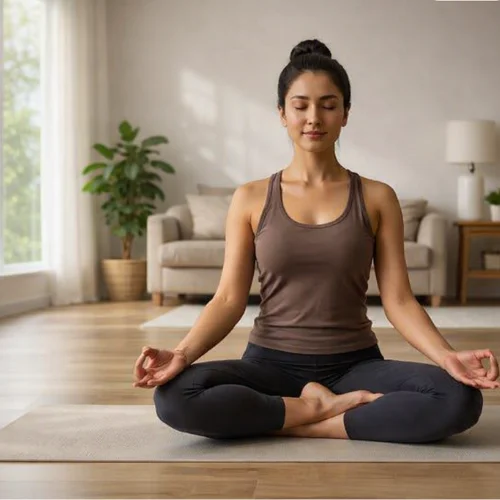
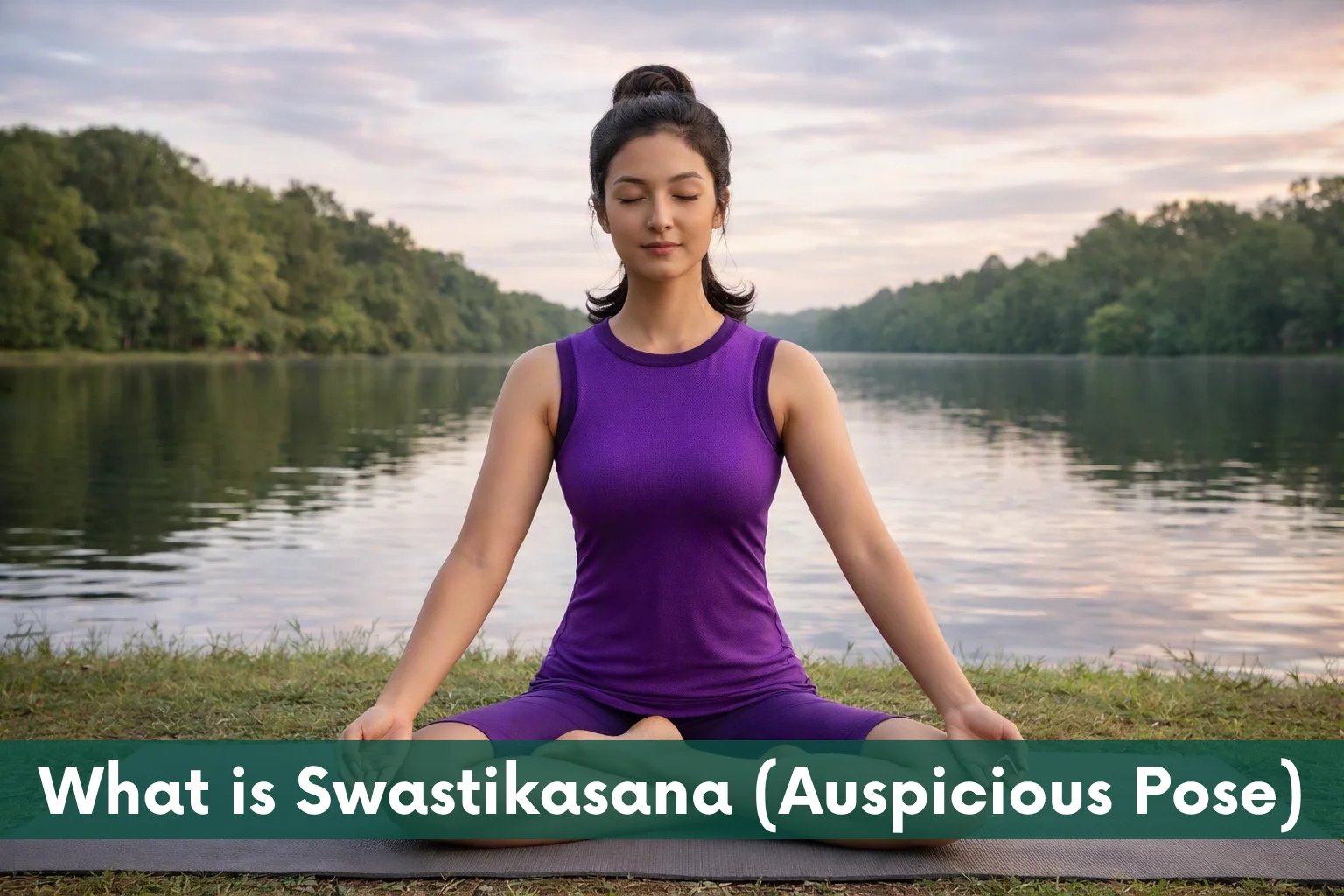
You may have naturally sat in a similar position without knowing its traditional name. In Swastikasana, you sit comfortably with your legs crossed, placing the feet beneath the opposite thighs. Keep your spine comfortably upright, relax your shoulders, and rest your hands on your knees or thighs. Although the posture looks simple, maintaining it with steady breathing and awareness can make your yoga practice feel more focused.
Swastikasana has a long history in traditional yoga and is commonly used as a seated posture for meditation, breathing exercises, and quiet reflection. Its stable position can help create a comfortable base for practices that require stillness and concentration.
For beginners, Swastikasana can be a practical way to develop awareness of posture and breathing without requiring advanced flexibility. With regular, comfortable practice, it can become a useful part of a balanced yoga routine.
What Does “Swastikasana” Actually Mean?
The word Swastikasana comes from Sanskrit and carries a meaningful traditional interpretation. Swastika is associated with auspiciousness, well-being, prosperity, and good fortune, while asana means a posture or seated position. Together, Swastikasana is often understood as the “Auspicious Pose.”