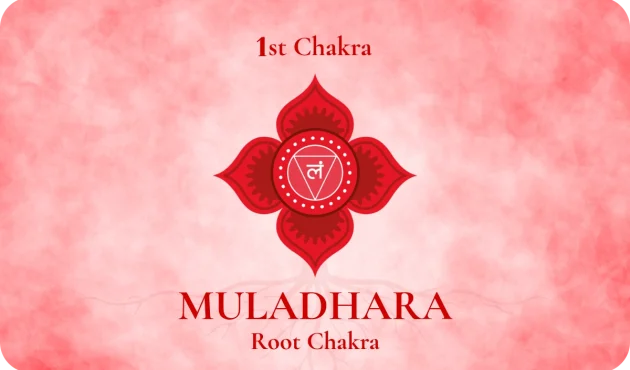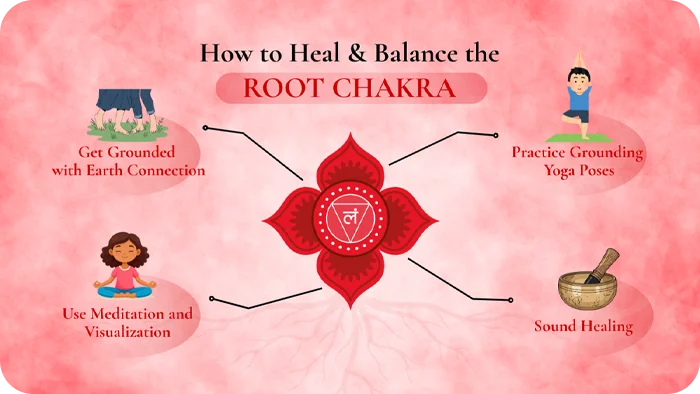
Explore The Root Chakra (Muladhara): Complete Explanation & Meaning with Amantrhit Wellness Retreat Center.
About The Root Chakra (Muladhara): Complete Explanation & Meaning

Introduction
Have you ever felt as if you are losing touch with yourself? Maybe you have observed yourself being anxious without any particular reason? Or perhaps your self esteem is not too good? Most of us have struggled with these issues. If you answered yes to these questions, then chances are that your root chakra might be a bit imbalanced and requires re-alignment.
But what is root chakra? What does it mean for it to be ‘imbalanced’, and how to unblock root chakra? Let’s find out.
What are Chakras?
As per Yogic philosophy there are several points in our subtle body where the energy centers meet, and these are called the chakras. There are 7 main chakras in our body, arranged vertically from the base of our spine to the crown of our head. These are Muladhara, Swadhishthana, Manipuara, Anahat, Vishuddha, Ajneya, and Sahasrara chakras. Each of these have their own functions, location, mantras, and unique features.
What is the Root Chakra (Muladhara)?
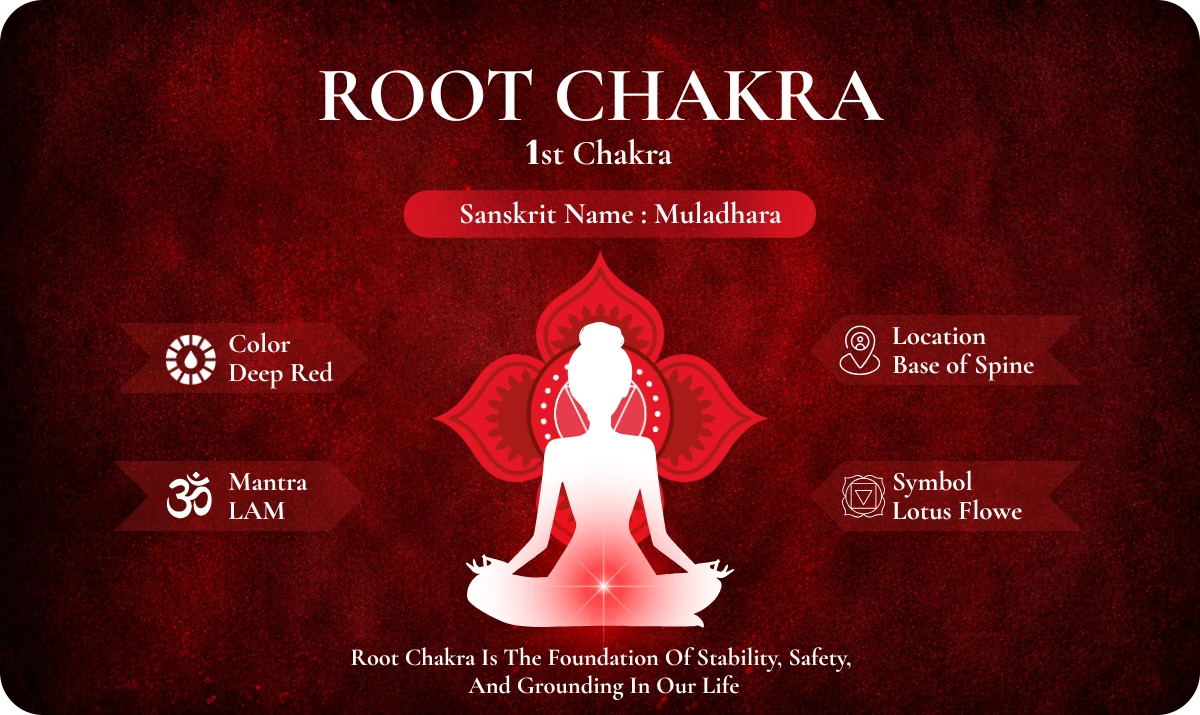
As the word "root" itself shows, the root chakra is the one located at the very base of our spine. In Sanskrit, it is called Muladhara, which means base or root. We can understand the role of Muladhara chakra in our body as similar to the roots of a tree, as it gives structure and stability to our mind and body. It is responsible for our sense of safety, groundedness, self worth, and being in touch with ourselves. When this chakra is balanced, people feel lightness and a positive sense of self. However, an imbalanced muladhara is the cause of feeling disoriented or ungrounded. Some key features of the base chakra are: